Judess
© 2002 Norman Samuda Smith.
___________________________________________________________________________________________________
‘A moment of patience in a moment of anger saves you a hundred moments of regret…’
Judess is featured in Britannia’s Children – Volume II – A Collection of Short Stories by Norman Samuda Smith
Buy your copy @
https://www.feedaread.com/books/Britannias-Children-Volume-II-9781788763851.aspx
___________________________________________________________________________________________________
“Hello…”
“Hello David?”
“Yes hello Mrs Malcolm, yuh a’right?”
“Yes dear, I’m fine t’ank you. Yuh good?”
“Yes I’m good. What can I do for you Mrs M?”
“Yuh speak to Judy yet?”
“No, I just come in from work, she s’pose to be comin’ round later.”
“Well, I don’t t’ink yuh gwine see her t’day yuh nuh.”
“Why? What’s happened?”
“Nothing happen. So yuh nuh talk to her?”
“No.”
“Ok, I’ll leave it for her to tell yuh den. I’ll get her to phone yuh when I speak to her.”
“Ok Mrs M.”
“I will call yuh back later after she talk to yuh, ok?”
“A’right cool.”
“Bye f’now.”
“Bye.”
‘Something’s up…’ David thought glaring at the receiver before he placed it in its cradle. He drifted from the living room into the kitchen where he saw an envelope leaning against the fruit bowl on the table. He sat down, picked it up and read, ‘To David,’ before he ripped it open and unfolded the letter enclosed…
Dear David,
I’m sorry; I know you were expecting me to come around this evening with the three months instalments I owe you for the loan. Please don’t think badly of me, I’m not running away, but I’ve been given an opportunity I haven’t had in over four years. I’ve been fed up of living from hand to mouth, scraping the bottom of the barrel, robbing Peter to pay Paul, so when Dennis offered an all-expense paid two weeks holiday to the Canary Islands, I couldn’t resist. Please don’t be mad, I’ll talk to you when I get back.
Love you – Judy
‘Who d’raas is Dennis?!’ David cussed screwing up the note and flinging it across the kitchen. His relationship with Judy had started to get shaky about six months ago, he sensed it but chose to ignore the warnings and soldiered on. He had been the perfect gentleman, not once did he push the physical side of their relationship beyond the token goodnight kiss, because Judy continually said she wasn’t ready cos she had just come out of an abusive relationship; he respected her wishes. Such restraint was saintly he thought, most man would of run to the hills, and yet without warning Judy was about to board a plane with Dennis – a stranger. Once they reach the Canary Isles and sekkle in, Judy might allow him to do the deed to her in their hotel room. The thought sent rage through him that shook his body.
‘Who d’raas is Dennis? What has dis bwoy got that I haven’t? – ‘Is there something lacking in me, or is there some strange mystique that attract Judy to him?’ Whatever it was, there had to be something that explained Judy’s behaviour. The truth of the matter, which deep down he knew, Judy was cool sharing his bed, doing the kissing and cuddling ting, sleeping with him; but terrified, maybe disgusted of the prospect of them engaging in intercourse and the mingling of their bodies, exhibiting their full nakedness, bathing in the flesh of another and drowning in the sea of spiritual emotions – ‘Yeh man sticky sweaty lust we never had, we wasn’t right,’ David thought. ‘I should have trusted my instincts.’ – Yet despite his senses telling him different, the prospect of life without Judy’s companionship right now was agonising. He mistakenly took it for granted that she was the one and most likely would always be by his side, and now, that false hope left his dreams crushed.
David sighed deeply and glared at the crumpled note he had dashed across the kitchen, he considered reading it again to confirm that what he read was genuine, but what was the point? – This was real, he had to accept it, and he needed a shower. His mom always said, ‘Water is de cleansing soul of life…’ and once under the spray of water he could wash away the confusion of self-guilt, the pain, the disappointment, the anger; figure out how to move on and learn how to be single again after four years of being with Judy.
The phone began to ring before he had the chance to enter his bedroom and step out of his work clothes. David didn’t want to answer it; in fact he didn’t want to speak to anybody at all, but his higher-self told him to pick up the receiver, the call might be important.
“Hello…”
“Hello David it’s me…”
His heart skipped a beat when he heard Judy’s voice and his mind was immediately tossed into a confusion mix up, should he hang up, cuss her or just be calm? His dad’s favourite saying was, ‘There’s a time to be humble and a time to fuss and cuss…’ and remembering that quote, he realised there were more important issues to deal with right yah now, rather than pacifying his ego by being disrespectful.
“Wha appm Judy, where are you?” David asked after taking a breath.
“I’m at the airport.”
“Which one?”
“Birmingham.”
“Oh, ok.”
“Are you alright?”
“Yeh man, me cool,” he lied.
“Oh, I was gonna say you sound calm. I thought you’d be vex wid me.”
“I kinna am, but there’s nothin’ I can do ‘bout it now. So where’s the money to pay the loan, yuh spend it?”
“No, it’s in the bank; I’ll give it to you when I get back.”
“Dat’s no good to me Judy. Payment is due inna couple of days. What am I s’pose to tell dem?
“Just tell ‘em that you’re a bit short and you’ll sort ‘em out in a couple of weeks.”
“As simple as dat huh? – Ok.”
“I’ll make it up to you when I get back babes, I promise.”
“Ok.”
“Gotta go, they’re callin’ us to board the plane; I left my car round the back at yours, the keys are in y’bedroom and the key to my flat, so could yah look after it and make sure my flat’s ok?”
“Yeh, yeh no problem.”
“Thank you babes, you’re a star, see you inna couple of weeks, bye!”
“Aaahhh…!” David screamed as he slammed down the receiver. He filled the air with curses as he entered his bedroom. There, sprawled out on the bedside cabinet, were the keys for her car and her flat. He stepped out of his work clothes and into the shower where the gush of water saturated his body. It was true what his mother said; ‘Water is de cleansing soul of life…’ Her words made him smile for the first time that evening. He knew what he was gonna do.
He pulled up outside Judy’s flat in her silver coloured Ford Mondeo. This was the last favour he was gonna do for her. He let himself into her flat, checked every room making sure all the wall plugs and electrical appliances were switched off. In the corner of her living room a CD rack stood beside the black Aiwa hi-fi system, he strolled over to it and collected all the CD’s that were his, throwing them into a plastic bag. Then he disconnected the speakers, unplugged the main body of the hi-fi from the wall. In two trips to the car, he placed them on the back seat and drove home. By the time he finished setting up the Hi-Fi in his living room, his phone began to ring. David strolled over and picked up the receiver expecting to hear Judy’s mom’s voice.
“Hello.”
“Hi David.” Maureen, Judy’s elder sister sounded solemn.
“Oh, wha appm Maureen, yuh good?”
“Yeh, I’m fine thanks, more importantly, how are you?”
“I’m good yuh know Maureen.”
“Yuh sure?”
“Well, I’m a bit battered, but I’ll survive.”
“Aww, mom was so embarrassed what Judy do to you, she ask me to phone you ‘n’ check in.”
“Thank you, and no need for her to be shame; she nuh do nuttn wrong.”
“Well we’re all embarrassed; friends don’t do that to each other y’know.”
“Well, dat’s not all she’s done Maureen, trust me.”
“Oh my god, what else she do? Don’t hide nuttn David, tell me…”
“Are yuh sittin’ down?”
“Yes I am…”
“Well let me reveal a few tings bout yuh sister…”
Surprisingly to David, during the days while Judy was away sunning it up with Dennis in the Canaries, he slept well, reported into work on time, and completed the briefs that were set; the only thing was when he reached home; he had too much time to think about Judy. She was like forbidden fruit, almost sterile, like being placed on a page of an ancient photo album that could be viewed but not touched. He had finally admitted to himself that their relationship was done, there was no going back. He was just a prop, something to dangle from her arm when they went out socially, and in secret, she used her prettiness to flirt with other men to get what she wanted. He had been used, he knew it, and her sister Maureen confirmed it in their many telephone conversations. Yet Judy was like no other woman he had met before, stunning, regal, always stared at when they were out together and continually given verbal accolades by both men and women, but that was the thing, she just had the looks that masked what was really inside.
David’s trail of thought was interrupted by a knock on the door; he took a deep breath and strolled through the hallway to open it. Judy stood smiling, her pearling white teeth shone amidst the background of her sun-kissed skin.
“Hi-yah babes, did yuh miss me?” She motioned to enter, arms spread wide as though she was expecting to walk into David’s welcoming hug. David took a step back and blocked her way in. Immediately, her smile dissolved into a frown.
“What’s wrong?”
“You are wrong; we are wrong!” David chuckled sarcastically.
“I had to take a break and nothing happened between me and Dennis if that’s what you’re thinkin’.”
“I really don’t care what happened between you and Dennis to be honest. Oh, by the way, here’s the key to yuh yard.”
“What about the car key?”
“The car is mine. You ain’t paid nuttn toward the loan payment. Yuh always makin’ excuses dat yuh bruk, so step away from me door.”
“How am I gonna get home?”
“I call a taxi fe yuh.” David dipped into his pocket and slapped a ten-pound note in her hand. “It should be here in five minutes, you can wait outside fe it; and another ting, I take the stereo from yuh yard, keep the three instalments yuh was gonna give me before yuh run off wid Dennis; yuh sister sort me out to pay off de loan. So you ‘n’ me is done.”
“Yuh told me mom and sister bout the loan?”
“Yep, and Maureen send me a cheque to pay it off one time.”
“You bastard!” Judy swung a kick at him, David stepped back to avoid her foot connecting with his ‘crown jewels.’
“Don’t do dat Judess!”
He gently pushed her away from his doorway.
“Judess? – Why yuh callin’ me that?”
“You figure it out, yuh not stupid! Yuh taxi a wait fe yuh – Bye.” David slammed the door in her face and leaned against it pumping his fists. “YESSS!”
___________________________________________________________________________________________________
*All rights reserved. No part of this story may be reproduced in any form or by any means without prior written permission of the writer Norman Samuda-Smith.*
___________________________________________________________________________________________________

BRITANNIA’S CHILDREN – Volume II
Posted in Articles, Arts, Black British Literature, Black History, Books, british dialect, Community, Culture, Education, Fiction, History, Literature, News, Newsletter, Publications, Short Story, Writing with tags Articles, Arts, Black British Literature, Black History, Books, british dialect, Community, Culture, Education, Fiction, History, Literature, News, Newsletter, Publications, Short Story, Writing on June 26, 2018 by https://panthernewsletter1.wordpress.comBRITANNIA’S CHILDREN – Volume II
A Collection of Short Stories that grapple with the issues of depression, love, hope and remembrance of departed ones is now published!!
More details where to buy the book click on the link below
https://www.linkedin.com/embed/feed/update/urn:li:activity:6417477603698966528
BRITANNIA’S CHILDREN – VOLUME II
Posted in Articles, Arts, Black British Literature, Black History, Books, british dialect, Community, Culture, Current Affairs, Education, Fiction, Literature, News, Newsletter, Publications, Short Story with tags Articles, Arts, Black British Literature, Black History, Books, british dialect, Community, Culture, Current Affairs, Education, Fiction, Literature, News, Newsletter, Publications, Short Story, Writing on May 1, 2018 by https://panthernewsletter1.wordpress.com
CELEBRATING BRITISH WRITERS OF COLOUR
Posted in Articles, Arts, Black British Literature, Black History, Books, Community, Culture, Current Affairs, Education, History, Literature, News, Newsletter, Poem, Poems, Publications, Writing with tags Articles, Arts, Black British Literature, Black History, Books, Community, Culture, Current Affairs, Education, History, Literature, News, Newsletter, Poem, Poems, Publications, Writing on March 17, 2017 by https://panthernewsletter1.wordpress.com
Read the new Breaking Ground: Celebrating Writers of Colour booklet
SPEAKING VOLUMES has begun the next chapter of the Breaking Ground project with the launch of a new booklet celebrating writers of colour. We hope that the booklet will be a valuable resource both at home and overseas, demonstrating the wide and varied literature of the UK whilst raising the profile and giving a platform to 200 contemporary British BAME authors.
Read the brochure in full by clicking on the link below
http://www.speaking-volumes.org.uk/projects/breaking-ground-book/

NORMAN SAMUDA SMITH SOUNDS BEAUTIFUL
Posted in Articles, Arts, Black British Literature, Black History, Books, Community, Culture, Current Affairs, Education, Fiction, History, Literature, Music, News, Newsletter, Poem, Poems, Publications, Reggae, Short Story, Writing with tags Articles, Arts, Black British Literature, Black History, Books, Community, Culture, Current Affairs, Education, Fiction, History, Literature, Music, News, Newsletter, Poem, Poems, Publications, Reggae, Short Story, Writing on February 22, 2016 by https://panthernewsletter1.wordpress.com
Norman Samuda Smith is a talented Author and former playwright. He is the first black British born novelist to be published in the UK, what an accolade to have under your belt. He has achieved so much and is so understated, but has done a plethora of work in which opened the doors through his writing of what it was like growing up as a black person in the UK.
In 2013, Norman self-published three of his books, Britannia’s Children, Freedom Street, and in celebration of its 30th Anniversary, his ground-breaking novel Bad Friday; which was first published in 1982 and republished in 1985. In a rare appearance, we at Sounds Beautiful Radio hosted a two part thoughtful and personal interview with him by our very own presenter ‘Westfield John’. It was a pleasure having Norman come into the studio for this interview. So sit back and listen to the full account of his surprising stories.
Listen to part 1 of the interview here…
Listen to part 2 of the interview here…
______________________________________________________________
AVAILABLE ON AMAZON
UK READERS GO TO: http://www.amazon.co.uk/-/e/B001KMCRD0
US READERS VISIT: http://www.amazon.com/-/e/B001KMCRD0
ALSO AVAILAIBLE @ https://www.feedaread.com/profiles/2025/


BAD FRIDAY BOOK REVIEW
Posted in Articles, Arts, Black British Literature, Black History, Books, Community, Culture, Current Affairs, Education, Fiction, History, Literature, Music, News, Newsletter, Publications, Reggae, Short Story, Writing with tags Articles, Arts, Black British Literature, Black History, Books, Community, Culture, Current Affairs, Education, Fiction, History, Literature, Music, News, Newsletter, Publications, Reggae, Short Story, Writing on December 19, 2015 by https://panthernewsletter1.wordpress.com
Bad Friday by Norman Samuda Smith
Rating: 5 of 5 stars
What the readers are saying about it…
‘When Norman Samuda Smith wrote Bad Friday, he became our first Black British born Novelist – he became a pioneer who spoke for a generation whose voice had yet to be heard in the long narrative form. Norman Samuda Smith and Bad Friday were born and made in Britain, where he put pen to paper.’
James Pogson (Writer) February 2013
__________________________________________________________________
‘I read Bad Friday before I met Norman and felt it was good then: a novel about school leavers set in inner-city Small Heath Birmingham (UK) among the Afro-Caribbean community in the 1970s. It uses the dialogue of the community skilfully to tell an affecting story. What’s amazing (to me) about it is the author’s youth when he wrote it – He was only 17, and in his early twenties when it was first published, but he shows a mastery of narrative…’
Alan Beard (Author); January, 2001
________________________________________________________________________
‘Around 16 years ago, when I was starting to write my first novel, I was eager to find past examples, or ‘blueprints’, which would provide inspiration for what I was about to do. Although I found many noteworthy stories from across the African Diaspora, I was looking for something set in Britain. And then I was gifted Bad Friday – a novel I have to this day. It was instrumental in letting me know that what I envisioned was achievable, and that a rich, Black British AND working class literary culture had been realised by others before me. It was liberating to read, and I’m heartened to know this book will be made available for others. It’s a long unsung milestone, and I hope that, with this reprint, that will change.’
Courttia Newland (Author/Screenwriter/Playwright) October 2013
__________________________________________________________________
‘Excellent book!!! The final paragraph on the back cover gives definition to the struggles we faced in our youth. There are very few credible books that speak to an almost forgotten group – Black British people growing up in the 1970s. Great context and real characters who make this a page turning read.’
Winifred V. Williams (A satisfied reader – Washington D.C) November 2015
________________________________________________________________________
‘Norman wrote Bad Friday when he was only 17. The book has a great depth to it from innocence to the harsh realities of life. The characters are all well-defined, a mixture of emotions; joy, sorrow, dreams, love and the escape through music via ‘Sound Systems’ – Norman has a real talent.’
John Miller (A satisfied reader – Birmingham, UK) December 2015
________________________________________________________________________
Read what they said about Bad Friday back in the day here…
________________________________________________________________________
ISBN: 9781784071110 – Total Pages: 237 Published: 29 October 2013
AVAILABLE ON AMAZON
UK READERS GO TO: http://www.amazon.co.uk/Bad-Friday-Norman-Samuda-Smith/dp/1784071110/ref=asap_bc?ie=UTF8
US READERS VISIT: http://www.amazon.com/Bad-Friday-Norman-Samuda-Smith/dp/1784071110/ref=asap_bc?ie=UTF8
ALSO AVAILAIBLE @ http://www.feedaread.com/books/Bad-Friday-9781784071110.aspx
Watch the Bad Friday book trailer here…
____________________________________________________________________

BLITZ CITIES
Posted in Articles, Arts, Black British Literature, Black History, Books, Community, Culture, Current Affairs, Education, Fiction, History, Literature, Music, News, Newsletter, Poem, Poems, Publications, Reggae, Short Story, Television, Theatre, Writing with tags Articles, Arts, Black British Literature, Black History, Books, Community, Culture, Current Affairs, Education, Fiction, History, Music, News, Newsletter, Poem, Poems, Publications, Reggae, Short Story, Television, Theatre, Writing on September 11, 2015 by https://panthernewsletter1.wordpress.comThe aftermath of the German bombing blitz of Birmingham 1940
Former Son of Small Heath now Hollywood actor David Harewood travels back to his native Birmingham, UK to look at his city’s Blitz story. During the second world war, Birmingham’s factories were crucial to war production, and although the city was heavily bombed, much of the destruction was kept secret. David uncovers this story and talks to victims of the Blitz. He also goes up in a small plane to recreate the German bombing raids – from the sky he is able to see that the house where he grew up in on Oldknow Road in Small Heath, was sandwiched between two major targets. Watch the episode here…
Check out the article published November 2012 here on PANTHER NEWSLETTER: TRIBUTE TO THE SONS AND DAUGHTERS OF SMALL HEATH here…


BOOK REVIEWS
Posted in Articles, Arts, Black British Literature, Black History, Books, Community, Culture, Current Affairs, Education, Fiction, Literature, Music, News, Newsletter, Publications, Short Story, Writing with tags Articles, Arts, Black British Literature, Black History, Books, Community, Culture, Current Affairs, Education, Fiction, Literature, Music, News, Newsletter, Publications, Short Story, Writing on September 9, 2015 by https://panthernewsletter1.wordpress.com
Britannia’s Children by Norman Samuda Smith
Our rating: 5 of 5 stars
Norman Samuda Smith’s BRITANNIA’S CHILDREN by Beresford Callum © 2015
‘If you haven’t purchased and read BRITANNIA’S CHILDREN by Norman Samuda Smith, here are my reasons why you should…’
An anthology of short stories which together not only represents a time capsule of black British youth experiences between the 1960s and possibly the late 1970s, Britannia’s Children by Norman Samuda Smith (2013), is also an organic record of the author’s Journeys. I read this book several times; first for leisure. Secondly, I read to establish a chronology other than that given by the year each story was written, for I felt so familiar with the setting and characters of each story I was forced to ask the questions Who and When? Lastly, I read to harvest the information between the lines. The hidden having dissected and critically analyzed Smith’s stories I found Britannia’s Children to be original, honest, inspirational and humbling.
As a book for leisure the mention of the familiar (for example Birmingham City Center, Grange Road Park and the Small Heath Community Center) evoked the feeling of nostalgia. At the most basic level it did for me and will do for the Birmingham populace; particularly if one traverses the Small Heath area, what the books of famous crime novelist Patricia Cornwell did for residents of the city of Richmond, Virginia (United States). Cornwell, having an intricate knowledge of Richmond used the City’s various locales as a backdrop to her stories. Just knowing that one shared the same knowledge as the writer not only spurred local interest, it boosted sales and often triggered heated discussion as to her accuracy. Every story triggered ten stories for me thus setting me on an emotional roller coaster.
Reading between the lines I found the first four stories 1981 through 1985 to be very revealing. Careful scrutiny of these stories; all of which have been presented in chronological order, gives a rough insight to Smith searching to find his dialect, his medium of expression and his true voice. As I read the stories I made note of the writer’s use of Caribbean colloquialism, British slang and of course standard English. As Smith grew more confident and comfortable Caribbean colloquialisms were less forced and he interjected some British working class slang. By Rasta Love it was a Standard English texture in varying degrees by colloquialisms and slang determined by situation. The book is truly an excellent example of hybridization.
Having written the above I must say I was not only pleasantly surprised by its contents, it was difficult keeping my comments objective. A contemporary of Smith’s from infant through to Secondary school up until 1973, Britannia’s Children appealed to me at multiple levels. Every story triggering ten stories thus causing my emotions to undulate as if riding on a roller coaster. There were very few stories in which I did not seem to be directly or indirectly involved but I can testify to the authenticity.
In the story “Who Can’t Hear Must Feel!” (Verse 1), the names Wendell and Leroy used in this tale are undoubtedly pseudonyms; I actually know who these two particular boys are. However, even if I did not, we all have knowledge of the family structure that they represent. I was one of those kids harmlessly begrudged for being able to play in the Park every day. The Grange Road Park was my backyard. Less known were the circumstances which made our freedom possible. Along with four other families, my family lived in a row house on Charles Road. With multiple sets of children in a rooming house and a backyard that was essentially a dump there was little room for play. Fortunately, the windows of the second floor kitchen used by my mother and the attic in which we lived both gave my parents panoramic views of the Grange Road Park. Being able to watch my every move I was given the false sense of freedom. This was true for several of my peers that played in the park daily, we were what are referred to in Caribbean culture as ‘one room pick ninny’. I find it humorous that while I begrudged Wendell and Leroy for their small private backyard, they begrudged me for my compulsory freedom. My parents would say, “Buoy!! The grass is not greener over the fence, just depends on how the sun shine pon it”. I guess they were right.
While I am familiar with the Streets named, I know nothing of Small Heath sound systems and dance hall life as portrayed in Rasta Love. I was plucked out of Birmingham before completing secondary school. My party experience in Birmingham is restricted to the summer of 1988. Similarly, my experience with the Small Health Community Center is limited to two evenings of indoor football. The stories in which they are mentioned however are very powerful triggers. I could see the houses on Muntz Street from our attic. Once being a truant from school I watched two houses on fire being put out by the firemen. Then related the events to my father, was my undoing. He realized I could not possibly have been at school and witnessed the fire. I will never forget that thrashing!! The characters Robo, Pedro and Beres who play active roles in the story are very real to me. These were the names of my peers with whom I (Smith included) ate lunch, walked to and from school, every day for a number of years. These names are those of the Alston Boys Secondary School crew, we huddled together as birds of a feather, played football, cricket, basketball and even sang on the school choir.
I was a member of that 1972 football team written about in the story titled The Football Match. I could never for the life of me recall the ending score or what precipitated the match. What I always remembered was fighting an Irish guy Mickey Jaggers. Also normally if we had to be on the Ritz field after school, the crew would exit the field on the Yardley Green end and walk it home via Green Lane as we all lived, on that side of Small Heath. However, on this particular evening for more than just having had a hard game of football, I was hurting all over. I forgot about comradery, somehow exited on the Little Bromwich Road side , walked to the number 54 bus stop not too far from the Ritz, used my last two pence to catch the bus and ‘draw mi half dead ass’ home.
Lastly, depending on one’s experiences stories can be a powerful stimuli, Smith’s stories for me were like a shot of adrenaline given to the dying. Having completed Britannia’s Children I had a eureka moment; as a child of Small Heath this did not only plot the author’s Journeys, they were milestones of my own.
__________________________________________________________________
BRITANNIA’S CHILDREN by Norman Samuda Smith
© Naiobi James 2013
WOMAN is the story of Ivey and her life as she lived it for forty years. She left Jamaica as a young woman and went to England. Once there she studied to become a nurse, married, had children and was now a grandmother. On the eve of her sixtieth birthday, after a party to celebrate, she realized that forty years had gone by and she’d never returned to her family; realized that it was too long a time to spend away from those she’d left behind in Jamaica. She felt it was time to plan a vacation; it was time to go home…
LIZA is the story of a young girl who was raised by very stern parents. They insisted she have the education they didn’t and forbid her to date or have boyfriends as they would get in the way of her schoolwork. Liza wanted to be a lawyer but her mother would have none of that; she wanted her daughter to become a doctor, to give back to her fellow man so, under duress, that is what Liza decided to do. She aced her first year; studied hard and won grants to continue her education. She was her family’s shining star. Then she met Barry. How could so much positive turn into a very big and dark negative?
These are just two of the stories you’ll find in Britannia’s Children, a collection of short stories by Norman Samuda Smith.
Written in Jamaican patois, I felt drawn into the culture as I experienced the pain, joy, frustration and successes of the characters peppered throughout the book. There are lessons to be learned in this book; does Who Can’t Hear Must Feel make you think of a few?
Britannia’s Children is a look through the lenses of life; a colorful slice of the lives of the people you’ll meet as you turn the pages. It will show you that no matter who you are or where you come from, there are lessons and experiences that we all share in one form or another.
I enjoyed this book and I know you will too, especially if your roots are in Jamaica and you haven’t been home in a while.
________________________________________________________________________
BRITANNIA’S CHILDREN by NORMAN SAMUDA SMITH
© John Miller 2015
“Britannia’s Children is a very good read, sad and entertaining AND thought provoking…”
Britannia’s Chidren is about black people in Britain and their children’s struggle to find their identity and their place in a white society from the 1950’s. There are a lot of parallels with white children’s upbringings by their parents after the aftermath of the 2nd World War. It’s a very good read, sad and entertaining AND thought provoking.
________________________________________________________________________
AVAILABLE ON AMAZON
UK READERS GO TO: http://www.amazon.co.uk/-/e/B001KMCRD0
US READERS VISIT: http://www.amazon.com/-/e/B001KMCRD0
ALSO AVAILAIBLE @ www.feedaread.com/books/Britannias-Children-9781782991656.aspx
Watch the Britannia’s Children book trailer here…
NOW AVAILABLE ON AMAZON
Posted in Articles, Arts, Black British Literature, Black History, Books, Community, Culture, Current Affairs, Education, Fiction, Literature, Music, News, Newsletter, Publications, Short Story, Writing with tags Articles, Arts, Black British Literature, Black History, Books, Community, Culture, Current Affairs, Education, Fiction, Literature, Music, News, Newsletter, Publications, Short Story, Writing on August 26, 2015 by https://panthernewsletter1.wordpress.comBAD FRIDAY & BRITANNIA’S CHILDREN
ARE NOW AVAILABLE ON AMAZON
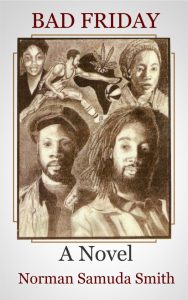
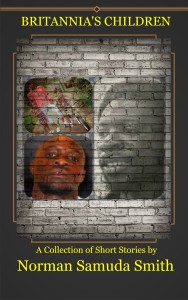
UK READERS GRAB YOUR COPIES @ http://www.amazon.co.uk/-/e/B001KMCRD0
US READERS GRAB YOUR COPIES @ http://www.amazon.com/-/e/B001KMCRD0
GREETINGS & WELCOME
Posted in Articles, Arts, Black British Literature, Black History, Books, Community, Culture, Current Affairs, Education, Fiction, Literature, Music, News, Newsletter, Poem, Poems, Publications, Reggae, Short Story, Television, Theatre, Writing with tags Articles, Arts, Black British Literature, Black History, Books, Community, Culture, Current Affairs, Education, Fiction, Literature, Music, News, Newsletter, Poem, Poems, Publications, Reggae, Short Story, Television, Theatre, Writing on May 15, 2015 by https://panthernewsletter1.wordpress.com__________________________________________________________________
PANTHER NEWSLETTER VOLUME FOUR: ISSUE 25
ITS MISSION: – TO EDUCATE; TO MOTIVATE; TO PROMOTE; TO INSPIRE; TO EXPRESS; TO SHARE…
__________________________________________________________________
MOTHER SITE
SAMUDA SMITH PUBLICATIONS
http://wp.me/1Jrv9
You can also view PANTHER NEWSLETTER @
http://panther-newsletter.blogspot.co.uk
__________________________________________________________________
This issue of PANTHER NEWSLETTER is dedicated to my Dad
Frederick William Smith
Sunrise: January 9 1924
Sunset: November 20 2014


_________________________________________________________________________
CONTENTS
_________________________________________________________________________
In this relaunch issue of PANTHER NEWSLETTER we have our SPECIAL GUEST, Birmingham’s Treasure Tonya Joy Bolton, check out her engaging interview. My lifelong bredrin Beresford Callum returns with another fascinating FEATURED STORY highlighting his encounters with the paranormal and his book review in the FEATURED ARTICLE. We also have THE MUSICAL COA-COA BASKET, and everybody’s favourite, THE CULTURE CORNER.
Enjoy!
__________________________________________________________________
EDITOR’S NOTE
__________________________________________________________________
REFLECTION
Greetings and welcome to the relaunch issue of Panther Newsletter.
My Dad’s health hadn’t been at its best in recent years. I give thanks I was able to fly out to California and spend quality time with him during his brief recovery in the summer of 2014, together with my brothers, sisters and extended family. Although we knew it was a matter of time, nothing prepares you for the inevitable news when it arrives.
He passed away November 20 2014 aged 90 years young. We gave him a good send off and celebrated his remarkable life.
He is survived by his wife of 38 years Dorothy J Smith (The Director), his children, and a multitude of grandchildren and great grandchildren. He will be deeply missed by us all.
Dad – Our General – I know your love-light will continue to shine and guide us – them and those you loved the most.
‘Everyting Bless…’
__________________________________________________________________
GRANDPA – THE GENERAL
© 2014 Jermaine Samuda Smith
__________________________________________________________________
Dad with my children, Daniel, Shereen and Jermaine; Birmingham, UK 1998.
To Grandpa the general…
Even though you were far away, visions of you are so memorable. All of your letters, cards and phone calls. You never forgot us at all.
Thanks to you Grandpa, I know my roots and where I’m from; and because of the teachings you passed onto my Dad; I hear it every day from him in my ear-drums.
I work hard every day Grandpa like you did, trying to make ends meet. Me and my Dad sweating hard. I’m staying out of trouble and standing firm on my feet.
Work was hard at the start, I didn’t want to carry on; but how can I give up when I remember your words saying, you’re proud of what I’ve done.
All I know is I’m proud that I’m your Grandson.
You are my guiding star, the General, my champion!!
We love you Grandpa.
Rest in Peace.
From your England tribe.
__________________________________________________________________
*All rights reserved. No part of this poem may be reproduced in any form or by any means without prior written permission of the writer Jermaine Samuda Smith.*
__________________________________________________________________
MY DAD
© 2014 Norman Samuda Smith
__________________________________________________________________
He showed me how to be a man. He’s helped me, advised me and guided me. Sometimes I haven’t agreed with him along the way. He’s strong and gentle too, and I strive to be like him every day…
I’m blessed to be his son, it was written from the start. He’s a supreme father, loving, kind and smart.
He’s not a chic dresser, but he’s trimmed and very neat; with his casually smart clothes, to the shoes he wears on his feet.
He doesn’t hang out at the pub, he doesn’t drive a flashy car; and when he takes a vacation, he doesn’t go too far.
He doesn’t dine on fine cuisine; to him: ‘Fast food nuh sweet,’ he always has rice on his plate, when it’s time for him to eat.
He has a humble house in California, which has all what he needs. He keeps his garden cut nice and short; he grows vegetables and fruits and he trims all the weeds.
He used to work long hours, to earn an average pay. Even when he was sick or tired, he turned up for work every day.
He worked as a mechanic, a builder, a variety of jobs. His pay just made ends meet; but the few good friends and family he has, makes his life complete.
He has never had much money, his life is not for show; but still he’s the richest man, I will ever know.
He’s not well-versed in poetry, the theatre or the arts; but he has wisdom, knowledge and overstanding of life, something that he constantly imparts.
He loves the simple things in life, for riches he doesn’t thirst, cos he knows what’s important, he puts his family first.
The wealth that God has given him, to treasure in his life; loving sons, daughters, grandchildren and great grandchildren, and a very special wife.
To many he’s just a simple man, but he’s the greatest man I know. A man of great dignity, honour, strength and pride; he’s my Dad, my mentor, my hero.
Bless up Dad! – Rest in Peace…


“Nuff Said…”
__________________________________________________________________
*All rights reserved. No part of this poem may be reproduced in any form or by any means without prior written permission of the writer Norman Samuda Smith.*
__________________________________________________________________
DAD THE GENERAL – WATCH OUR VIDEO TRIBUTE TO HIM ; here…
_________________________________________________________________________
A SENSE OF BELONGING
by Grace Patricia Pinnock
_________________________________________________________________________

I was recently in touch with an old schoolmate of mine. We were pupils of Washwood Heath Comprehensive School, Birmingham, UK from 1973 to 1975. Grace Patricia Pinnock now resides in Spanish Town after migrating from England to Jamaica, her parents’ homeland in 1991 and found it to be a place which she can truly call home.
Her book, A Sense of Belonging, published by Arawak Publications, Kingston Jamaica (2012), is her personal account of being British born of Jamaican descent.
Grace tells of her ‘Jamaican’ childhood in England, her discontent with the subtle forms of racism in the British education system, the search for her identity, her wrestles with the decision to move from England to Jamaica, and of the challenges she faced to begin her new life in Jamaica with its traditions and culture that she was raised to honour and respect.
It also gives some insight into why one British born Jamaican identifies with the island of Jamaica and questions whether the British born person of Jamaican or other West Indian descent will ever be truly accepted as Black and British in the UK.
You can get your copy of
A Sense of Belonging here…
Check out Grace’s blog too @ http://graceasenseofbelonging.blogspot.co.uk/
_________________________________________________________________________
SUMMER TIME
Winter has stepped away, Spring is here. We all look forward to Summer Time when we pray for the sun to shine and everyone has continuous smiles on their faces. To get y’all into the summer time mood, here’s a tune my brother and my son threw down during a jam session in the recording studio; their version of SUMMER TIME: listen up and watch it here…
__________________________________________________________________

 Panther Newsletter